
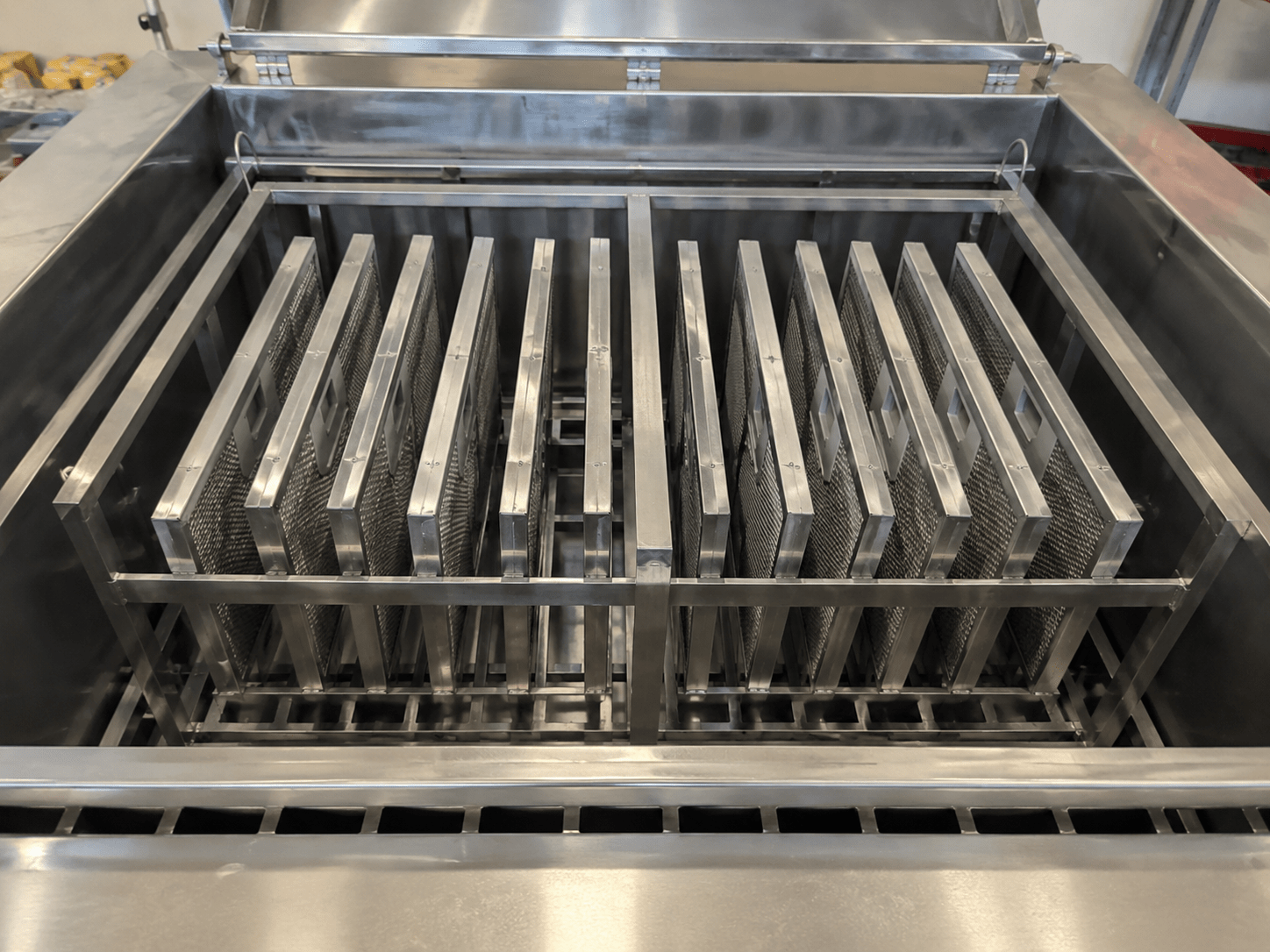
Ultrasonic cleaning of cooker hood filters: how to clean metal filters quickly and professionally
The cleaning of extractor hood filters It is a critical task in professional kitchens, restaurants, hotels, catering businesses, institutional kitchens and maintenance companies. With daily use, metal grease filters accumulate a mixture that is difficult to remove: oils, burnt-on grease, smoke residue, dust and dirt trapped between the filter’s mesh or slats.
For a one-off household clean, it may be enough to use hot water, a degreaser and a brush.
However, when we talk about clean the extractor hood filters on a regular basis, when dealing with large quantities or heavily encrusted grease, manual methods become slow, inconsistent and uneconomical.
That is why more and more companies are opting for a ultrasonic cleaning machine for hood filters. This technology enables the interior of the filter to be thoroughly cleaned, even in areas that cannot be reached by a cloth, a brush or a conventional water jet.
Cleaning kitchen extractor hood filters
Why it is important to clean the filters in your cooker hood
The cooker hood filters are the first line of defence against the grease produced during cooking. Their function is to trap particles, oils and residues before they reach the extraction duct.
When the filter becomes clogged, the extractor hood becomes less effective, the risk of unpleasant odours increases, and grease may end up accumulating in areas that are more difficult to clean.
In professional kitchens, this problem is even more significant. A cooker hood that does not extract fumes properly affects the working environment, generating more heat, more smoke and more grime in the kitchen area.
Furthermore, clogged filters force the extraction system to work harder, which can increase energy consumption and reduce the system’s service life.
In kitchens where cooking takes place for many hours a day, keeping the metal filters in the extractor hood clean helps to reduce the build-up of grease in the system and makes it easier to comply with maintenance protocols.
Which cooker hood filters can be cleaned using ultrasound?
Ultrasonic cleaning is particularly suitable for metal grease filters, which are the most common types found in professional and industrial extractor hoods.
These filters are usually made of stainless steel, aluminium or other metals, and have internal shapes where grease tends to build up easily.
Ultrasound is very effective because it doesn’t just clean the visible surface. The cavitation generated in the bath reaches the grooves, folds, mesh, corners and internal areas of the filter. This allows for a much more thorough clean than manual washing.
However, not all filters should be treated in the same way. The activated carbon filters, for example, are not designed to be washed or regenerated using ultrasound. In most cases, they must be replaced when they lose their absorbency. The same applies to certain filters made of paper, fibre or disposable materials.
Therefore, before deciding on a cleaning process, it is advisable to identify the type of filter, the material, the degree of soiling and the frequency of maintenance. An ultrasonic cleaner is primarily designed for users who need to clean metal hood filters professionally, on a regular basis and with consistent results.
How often should you clean the cooker hood filters?
How often cleaning is required depends on how the kitchen is used, the type of food prepared and the amount of grease produced. A domestic kitchen used only occasionally is not the same as a restaurant kitchen, a chip shop, a hotel or a company providing cleaning services to third parties.
In professional settings, filters may need to be cleaned weekly, fortnightly or even more frequently if the kitchen is in operation for many hours a day. Kitchens that involve deep-frying, griddling, charcoal grilling, fatty foods or high-volume production tend to cause the filters to become dirty much more quickly.
There are clear signs that the filter needs cleaning: loss of suction, a persistent odour, visible grease, dripping, smoke taking longer to clear, or increased noise from the hood. When these symptoms appear, the filter is already operating below its optimum performance.
For companies specialising in the maintenance or cleaning of extractor hoods, setting a fixed schedule helps to organise the service more effectively and avoid emergency clean-ups. A ultrasonic cleaner for cleaning hood filters It helps to standardise that work, reducing the time taken and improving the quality of the result.
Why manual methods are not always sufficient
Cleaning cooker hood filters by hand can work when there is only a light build-up of dirt. The problem arises when grease dries out, hardens or accumulates on the inside of the filter. At that point, simply scrubbing the outside does not guarantee that the inside will be clean.
Manual cleaning also depends heavily on the operator, the time spent and the pressure applied. Two filters that appear to be identical can yield very different results. Furthermore, when several filters have to be cleaned each day, the process becomes repetitive, slow and inefficient.
A dishwasher may be an option in some cases, but it does not always remove stubborn grease and may not be suitable for large, very dirty filters or those used in intensive professional settings. There is also a risk of leaving residue in the dishwasher itself or of failing to clean the entire part evenly.
Therefore, when the aim is to achieve a thorough, repeatable and cost-effective clean, ultrasonic technology offers a clear advantage. It allows you to work with hot water, degreasing detergent and cavitation, attacking the grease from inside the filter and not just from the surface.
When manual cleaning takes too long or fails to remove grease from the inside of the filter, it may be time to switch to a professional system. An ultrasonic cleaner allows you to standardise the process, reduce labour costs and improve the quality of the cleaning.
At IBERKLEEN We can assess your application and recommend a solution based on the number of filters, dimensions, cleaning frequency and level of soiling.
How an ultrasonic cleaning machine for hood filters works
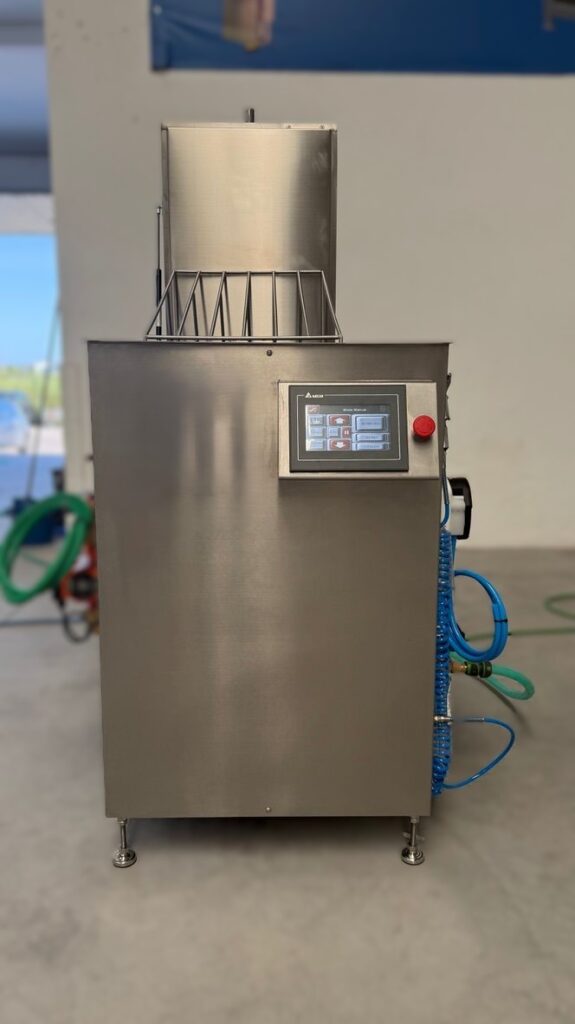
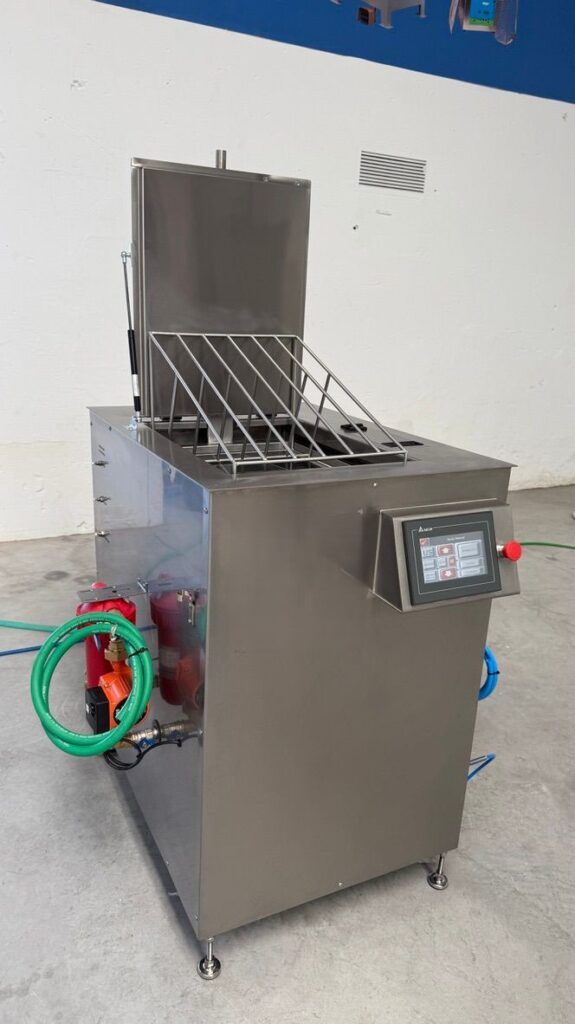
An ultrasonic cleaner uses a tank containing water and a specialised detergent.
Inside the bath, the transducers generate ultrasonic waves that produce millions of microbubbles. This phenomenon, known as cavitation, releases energy onto the surface of the item and dislodges any adhering dirt.
In the case of hood filters, this is particularly useful because grease does not just build up on the outer surface. It often becomes trapped between slats, mesh, folds and internal areas. Cavitation penetrates these spaces and helps to break down the grease without the need for aggressive scrubbing.
Furthermore, the process is normally carried out at a controlled temperature using a detergent suitable for cooking fats. The combination of heat, chemicals and ultrasound helps to reduce cleaning time and improve the consistency of the results.
To put it simply: a ultrasonic cleaner for bell-type filters Not only does it wet the filter, but it also generates a microscopic mechanical action capable of reaching places that other systems cannot.
How to clean cooker hood filters using ultrasound, step by step
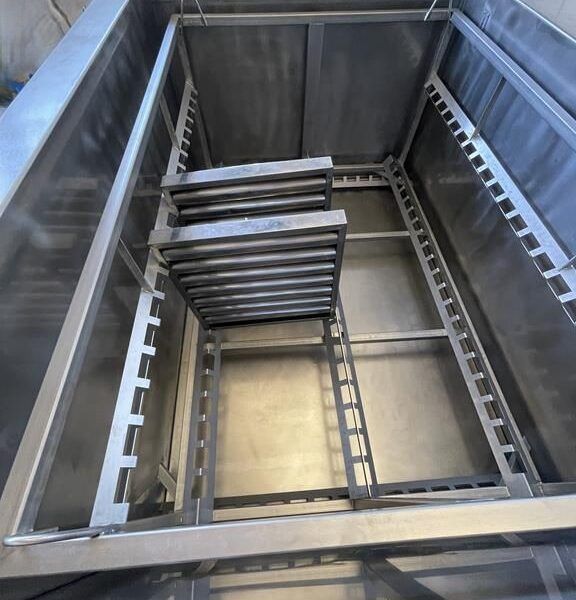
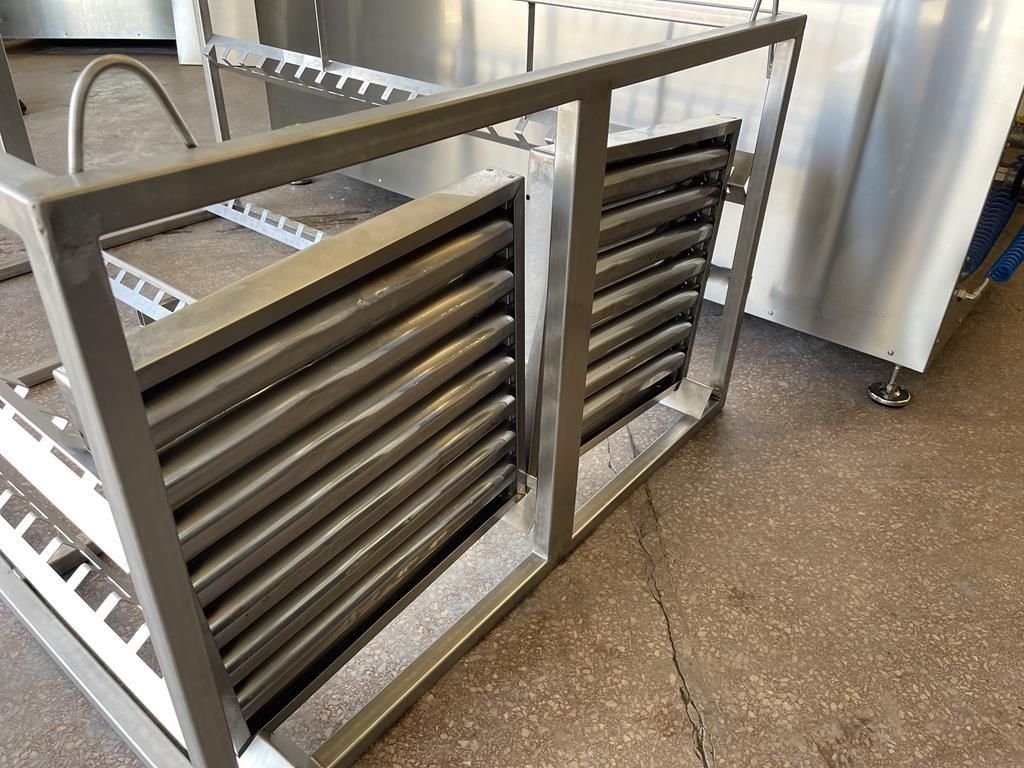
The process is simple: the filters are removed from the hood, any excess surface grease is wiped off, and they are placed in the ultrasonic tank, preferably on a rack that allows water to circulate around all areas.
The machine operates with hot water, ultrasound and a degreasing detergent suitable for use with metal filters.
During the cycle, cavitation breaks down the fat accumulated both on the surface and inside the filter, reaching areas that a brush or manual washing cannot reach.
Once cleaning is complete, the filters are rinsed, left to drain and dried thoroughly before being refitted. In professional settings, the process may be followed by rinsing, blowing or drying to speed up day-to-day work.
Cleaning of extractor hood filters for restaurants, hotels and commercial kitchens
In a professional kitchen, cleaning filters is not a minor task. It forms part of the preventative maintenance of the extraction system and has a direct impact on staff hygiene, safety and comfort.
Restaurants, hotels, food production facilities, central kitchens, canteens and catering companies tend to handle much larger volumes of grease than a private household. They therefore need solutions that are quicker and more reliable than washing by hand.
A ultrasonic cleaning machine for cooker hood filters It enables you to organise daily or weekly work cycles, reducing the time taken for maintenance and improving the cleanliness of each filter. Furthermore, it allows you to process several filters in a single cycle if the tank is of a suitable size.
For this type of user, the purchase of a machine should not be viewed merely as an investment in a cleaning tool, but as an investment in maintenance, safety, productivity and the quality of the working environment.
Professional cleaning of extractor hood filters for maintenance companies
Companies that clean hoods, ducts and extraction systems need to deliver visible and consistent results. In this type of service, cleaning time is key: the faster and more standardised the process, the greater the company’s capacity will be.
Using an ultrasonic cleaner, filters can be cleaned in batches, reducing the reliance on manual labour. This helps to increase productivity, improve service delivery and reduce operator fatigue.
Furthermore, having a professional solution at your disposal can be a commercial advantage. Compared to a service relying solely on a brush, hot water and degreaser, ultrasonic cleaning conveys a more technical, more advanced and more efficient image.
Therefore, for companies wishing to specialise in cleaning of cooker hood filters, incorporating ultrasound technology can open up a profitable line of business, particularly in areas with a high concentration of hospitality venues, restaurants, hotels or commercial kitchens.
How to choose an ultrasonic cleaner for cleaning hood filters
The choice of machine depends mainly on the size of the filters, the number of parts to be cleaned and how often it will be used.
It’s not enough just to choose any old tub: The filter must be inserted correctly and be completely submerged in the working fluid.
It is also important to consider the ultrasonic power, the operating temperature, the tank’s durability, the drainage system, how easy the tank is to clean, and the option to fit accessories such as baskets, supports or platforms for holding the filters.
In professional applications, it is advisable to choose a robust machine designed to handle degreasing detergents and repetitive cycles. If the workload is high, it may be worth considering solutions with greater capacity, filtration systems, oil separation or additional rinsing and drying stages.
The key question is not just “what machine do I need?”, but how many filters I want to clean per cycle, how much time I want to spend on each batch, and what level of finish I need to achieve.
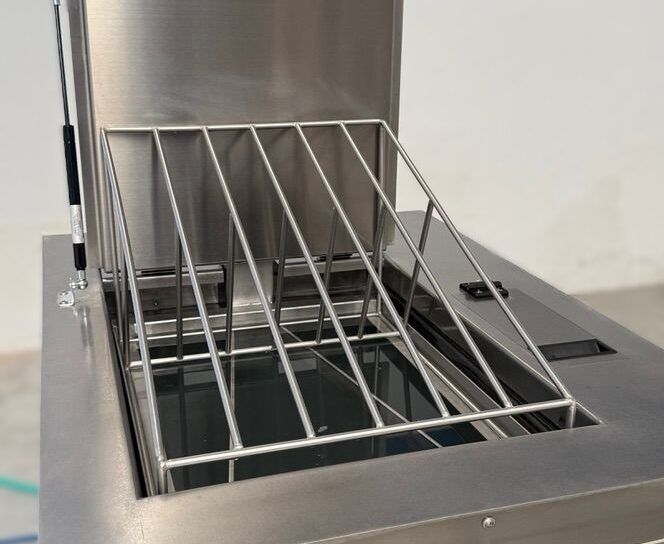
Choosing the right machine is key to ensuring the process is profitable. Not all hoppers are suitable for all filters, and a machine that is too small can limit productivity from day one.
Please send us the dimensions of your filters, a photo showing how dirty they are, and the approximate number you need to clean per day or per week. With this information, we’ll be able to advise you on the most suitable drum capacity, power rating and configuration.
Common mistakes and problems when cleaning cooker hood filters
One of the most common mistakes is clean only the visible part of the filter. Although it may look clean on the outside, grease can still build up inside, particularly in the mesh, folds or metal slats. This means that the hood continues to extract poorly, retains unpleasant odours or becomes dirty again quickly.
It is also important to avoid products that are too harsh, metal brushes, scrapers or chemicals that are not compatible with the filter material. An unsuitable detergent can damage the finish, warp the filter or cause it to lose its shine, particularly in the case of aluminium filters or more delicate materials.
Another common problem arises when filters are refitted before they are completely dry. This can lead to dripping, dampness in the extraction area or marks on the cooker. Therefore, after any cleaning, rinsing and drying should form part of the process.
If, after cleaning the filters, the cooker hood still smells unpleasant or is not extracting properly, it may be that the grease has not been completely removed or that dirt has built up in other parts of the system, such as the inside of the cooker hood, the duct or the activated carbon filters in recirculating cooker hoods.
In professional settings, another common mistake is cleaning without monitoring the time, temperature or detergent concentration. This leads to inconsistent results and means that each cleaning cycle relies too heavily on the operator. An ultrasonic cleaner helps to standardise the process and achieves a deeper, more consistent clean, particularly when filters have grease encrusted inside them.
❓ Frequently asked questions about cleaning cooker hood filters
The simplest way is to remove them, wipe off any excess grease, soak them in hot water with a degreasing detergent, leave them to soak, scrub if necessary, rinse and dry thoroughly. In professional settings, the most effective option is to use an ultrasonic cleaner, particularly when the filters have encrusted grease or when a large number of filters are being cleaned at once.
Yes, provided they are compatible metal filters. Ultrasound is particularly effective at cleaning grease filters in cooker hoods, as it reaches the inner areas where dirt accumulates.
In some cases, yes, but it depends on the type of filter and the manufacturer’s instructions. A dishwasher can be used for light cleaning, although it does not always remove heavily encrusted grease. For professional use or very dirty filters, ultrasonic cleaning offers a more thorough clean.
It depends on how it is used. In a home, cleaning once a month or every few weeks may be sufficient. In restaurants, hotels and commercial kitchens, this may need to be done weekly or even more frequently if a lot of fatty foods are cooked.
It is best to use a degreasing detergent that is compatible with the filter material. In ultrasonic machines, products suitable for this process should be used, avoiding chemicals that are excessively harsh or produce a lot of foam.
Not usually. Activated carbon filters are normally replaced when they are saturated. They should not be treated in the same way as metal grease filters.
When grease is firmly caked on, it is best to use hot water, a degreasing detergent and allow it to work for longer. If you are looking for a professional clean, the best option is to use ultrasound, as the cavitation helps to loosen the grease that has built up inside the filter.
It depends on the size of the filter and the number of units you wish to clean per cycle. Ideally, you should choose a tank into which the filters fit comfortably and are fully submerged in the liquid. For professional use, it is advisable to select a machine sized to suit your actual workload.
IBERKLEEN: specialists in industrial ultrasonic cleaning
At IBERKLEEN We design and manufacture industrial cleaning solutions for companies that require reliable, repeatable processes tailored to their production needs. We work with both standard machines and bespoke projects for sectors such as the professional catering industry, industrial maintenance, the automotive sector, the food industry, workshops and technical services companies.
Our expertise in ultrasonics enables us to define not only the machine, but also the entire process: tank dimensions, ultrasonic power, temperature, detergent, loading system, rinsing, drying and bath maintenance.
If you need to clean extractor hood filters, metal parts or components with encrusted grease, we can help you transform a manual process into a faster, cleaner and more professional solution.