
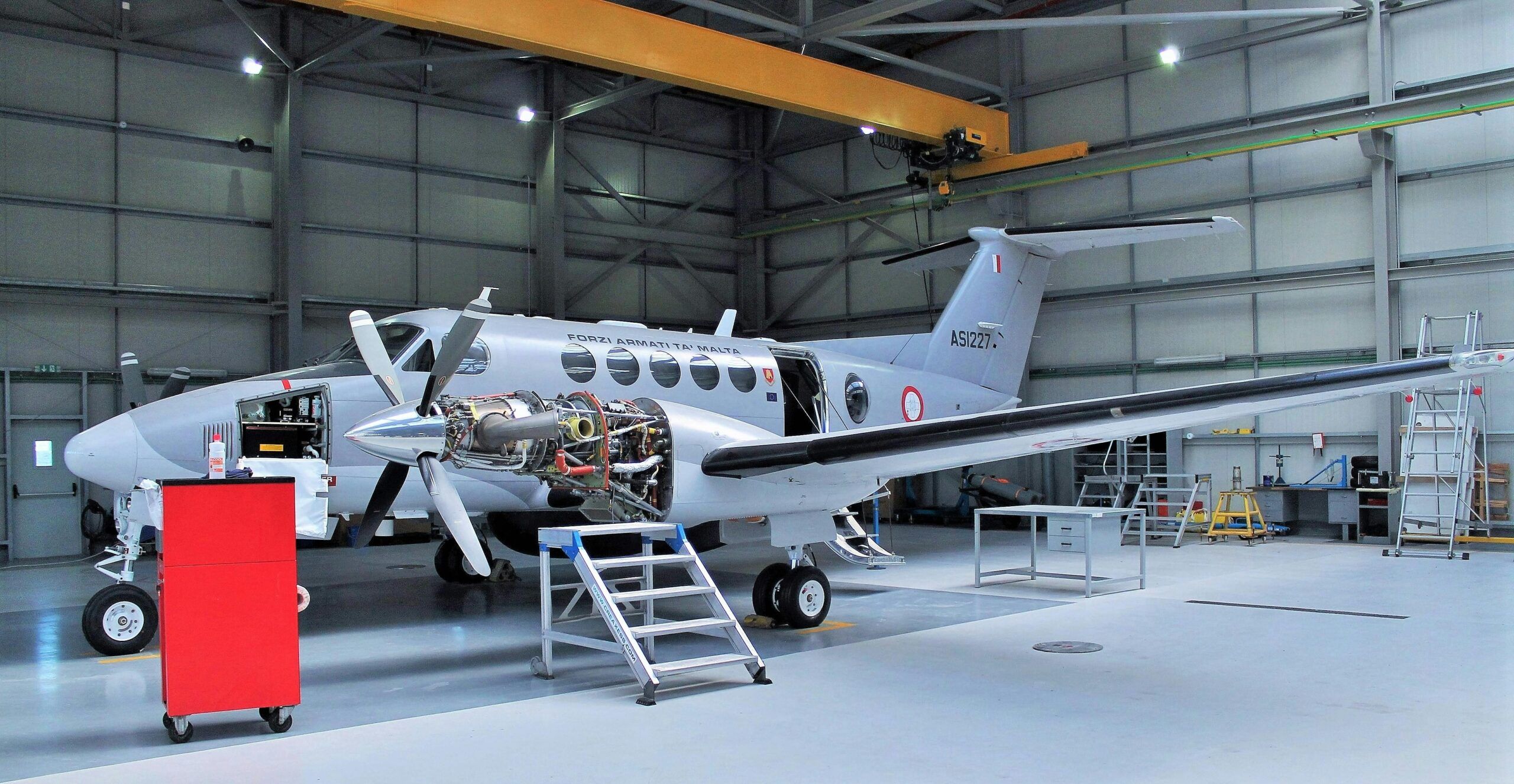
Cleaning in the aerospace and aeronautics sector
In aerospace and aviation, component cleaning is not just another step in the value chain: it is a fundamental requirement for safety, performance and regulatory compliance.
Critical parts such as turbines, landing gear, hydraulics or electronic components require specialised cleaning processes that ensure the total removal of contaminants, both visible and microscopic.
Cleaning in the aerospace and aeronautics sector
Why is cleanliness in aerospace critical?
The slightest residue can lead to failuresA particle in a hydraulic line can cause leaks, an oil film on a sensor alters its reading and dirt in an undercarriage accelerates the wear of moving parts.
In addition, customer audits and certification bodies require particle and filmic cleanliness tests within international standards (SAE, ISO).
Components requiring specialised cleaning
🔹 Turbines and enginescombustion residues and high-temperature oils.
🔹 Landing gears: grease, brake dust, environmental dirt.
🔹 Hydraulic and pneumatic systemsparticle-sensitive valves and ducts.
🔹 Sensors and electronicsextremely sensitive to residual films.
🔹 Composite materials and light alloysThey require techniques that do not damage their structure.
Cleaning technologies in the aerospace sector
Ultrasonic cleaning
Ultrasonics generate cavitation that reaches internal geometries and complex areas without damaging the material. They stand out for their speed, uniformity and low chemical consumption.
Aqueous batch systems or individual parts
They use low-foaming detergents and multi-stage cycles (pre-wash, rinse, dry). They are common in production lines and provide repeatability and traceability.
Controlled solvents
For certain contaminants or materials, industry-approved solvents are used, always with closed equipment and vapour recovery.
Dry and combined cleaning
Some processes integrate deburring and cleaning in a single cycle, increasing productivity and reducing handling.
Comparison of aerospace cleaning technologies
Technology | Key benefits | Limitations | Typical applications |
Ultrasound | Access to complex geometries, speed, fewer chemicals | Not suitable for very large parts without adaptation | Sensors, hydraulics, turbines |
Batch aqueous | High repeatability, easy automation, traceability | Requires space and management of toilets | Series production, undercarriages |
Solvents | High degreasing power, compatibility with certain contaminants | Strict regulation, cost of waste management | Complex metal parts, MRO components |
Dry/combined | Saving steps, less handling | No substitute for critical stages of film cleaning | Machined metal components |
MRO vs. manufacturing: different requirements
At manufactureThe cleaning ensures that subsequent processes such as bonding or coating are carried out on clean and stable surfaces.
At MRO (Maintenance, Repair & Overhaul)cleaning allows to inspect components without false defects, to extend the life of assets and to reduce the Time Out of Service (TAT).
Cleaning chemistry and material compatibility
Detergents are used low foaming aqueousenzyme formulations and, where necessary, approved solvents.
Compatibility with aluminium, titanium, composites and elastomers is essential to avoid corrosion, deformation or swelling.
Automation and process control
Closed cabinets, multi-stage lines and monitoring of critical parameters (conductivity, contaminant load, temperature) guarantee consistent results.
Many suppliers offer test centres where processes can be validated with real parts prior to investment.
Sustainability and environmental compliance
The industry is migrating to cleaner solutions: toilet recycling, reduced carbon footprint and comprehensive waste management services. This not only reduces operating costs, but also facilitates environmental and OEM customer audits.
How to choose an aircraft cleaning machine and supplier
When selecting an industrial cleaning partner, it is worth considering:
🔹 The volume and size of parts.
🔹 The common pollutants (oils, dust, grease, carbon).
🔹 The need to automation and traceability.
🔹 The validation of the process against SAE/ISO standards.
🔹 The comprehensive after-sales service (machine, chemistry, maintenance and waste management).
Use cases and return on investment (ROI)
In production, aqueous and ultrasonic systems reduce rejects in assembly processes.
In MRO, the cleaning machines reduce inspection times and extend the life of critical assets.
In laboratories, they guarantee the reliability of tests without cross-contamination.
The investment is recovered in less time thanks to reduced reprocessing, lower chemical consumption and energy efficiency.
At IBERKLEEN we develop ultrasonic cleaning machines, aqueous cabinets and multi-stage lines adapted to the needs of the aerospace and aeronautics sector.
👉 Do you want to evaluate which technology best fits your parts?
Request a personalised study with real tests and discover how to improve safety, traceability and costs in your processes.