
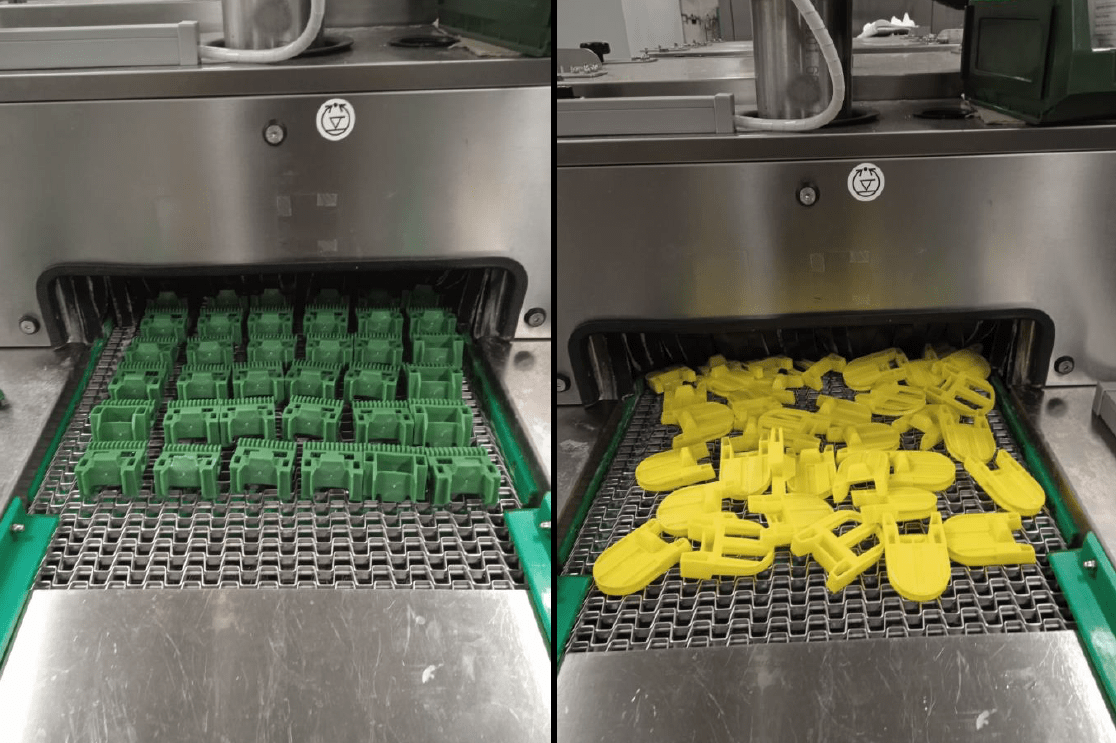
Cleaning of Plastics in Industry | Machines and Technical Solutions for Effective and Safe Cleaning
In industrial sectors such as the automotive industry, medical device manufacturing, precision electronics or technical packaging, the cleaning of plastic parts is a critical process that must be carried out with the utmost care, as not all plastics have the same resistance to chemicals, temperature or industrial cleaning methods, and a poor choice of detergent or technology can lead to micro-cracking, deformation or even loss of functional and aesthetic properties.
In this article you will learn:
- How to clean plastics without altering their integrity.
- Which industrial cleaning technologies are the safest and most effective.
- Compatibilities between plastic materials and cleaning products.
- Recommendations for manufacturers of plastic parts and moulds.
Find out how to clean plastic parts without damaging them, using compatible detergents and technologies such as ultrasonic cleaning and mild aqueous systems.
Why is the cleaning of plastics sensitive?
Unlike steel or glass, plastics are sensitive materials to temperature, chemicals and surface stresses. In addition, being organic materials, they tend to attract difficult residues such as greases, oils, organic films, inks or static dust, Therefore, cleaning plastics in industrial environments requires a balanced approach combining compatible detergents with appropriate machinery and perfectly controlled cleaning parameters.
Depending on the type of polymer, the cleaning must be carefully tailored to avoid
- Tensile cracking (especially in polycarbonates and PMMA).
- Thermal or chemical deformation.
- Loss of transparency or optical properties.
- Surface damage by abrasion or aggressive solvents.
Compatibility between types of plastics and industrial cleaning methods
According to available technical guidelines, most common polymers in the industry are compatible with mild alkaline aqueous cleaning solutions, provided that moderate temperatures, low concentrations and controlled contact times are maintained.
It is advisable to use specifically formulated products to avoid adverse reactions or surface stress.
Among the plastics with better compatibility we find the polypropylene (PP), polyethylene (LDPE, LLDPE), PVC, nylon, PEEK, PVDF, polysulphone (PSU), polystyrene (PS), fluoroethylenes (FEP, PTFE), EPDMall of which are suitable for treatment with mild aqueous detergents under non-aggressive cleaning conditions.
However, materials such as stressed polycarbonate require particular attentionThey are highly sensitive to surface tensions, and it is recommended to use very diluted solutions without surfactants, preferably alkaline or bleach-based.
Recommended cleaning technologies for plastics
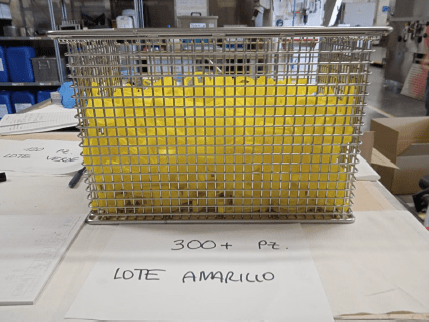
Ultrasonic cleaning of plastic parts
The ultrasonic cleaning is a highly effective solution for removing complex residues on plastic parts with difficult geometries or internal areas that are difficult to access, as it allows uniform washing, without abrasion or friction, and with an excellent capacity to remove contaminants such as technical grease, machining residues or organic films. It is especially recommended for small parts, medical components, electrical connectors or precision parts used in injection moulds.
This technology, combined with mild alkaline detergents with a high emulsifying capacityguarantees excellent results without affecting the structure and surface of the plastic material, offering an ideal balance between thorough cleaning and material protection.
Spray, immersion or CIP cleaning systems
For larger plastic parts or simple geometry, such as containers, trays, moulded parts or industrial housings, the spray cleaning systemsThe use of plastic specific detergents formulated with low foam, without aggressive solvents and with high wetting capacity, immersion or cleaning in place (CIP) offers an efficient and controlled alternative, allowing the elimination of residues with automatic programmable cycles and the use of specific detergents for plastics formulated with low foam, without aggressive solvents and with high wetting capacity.
These systems optimise washing times, reduce water and energy consumption and at the same time ensure homogeneous cleaning while respecting the integrity of the polymer.
Key recommendations for the safe cleaning of plastics
To achieve effective results without compromising the structure of the plastic materials, it is recommended:
- Use detergents specifically formulated for sensitive or technical plastics, avoiding solvents such as acetone, isopropyl alcohol or products with high surface tension;
- Control the washing temperature, ideally below 50 °C to avoid thermal deformation;
- Reduce contact times to less than 5 minutes, especially on materials susceptible to stress cracking;
- Perform compatibility tests when working with special polymers or unknown additive fillers;
- Choose industrial cleaning machines that allow precise control of the working parameters (temperature, concentration, pressure, duration), especially in regulatory environments such as medical, pharmaceutical or food.
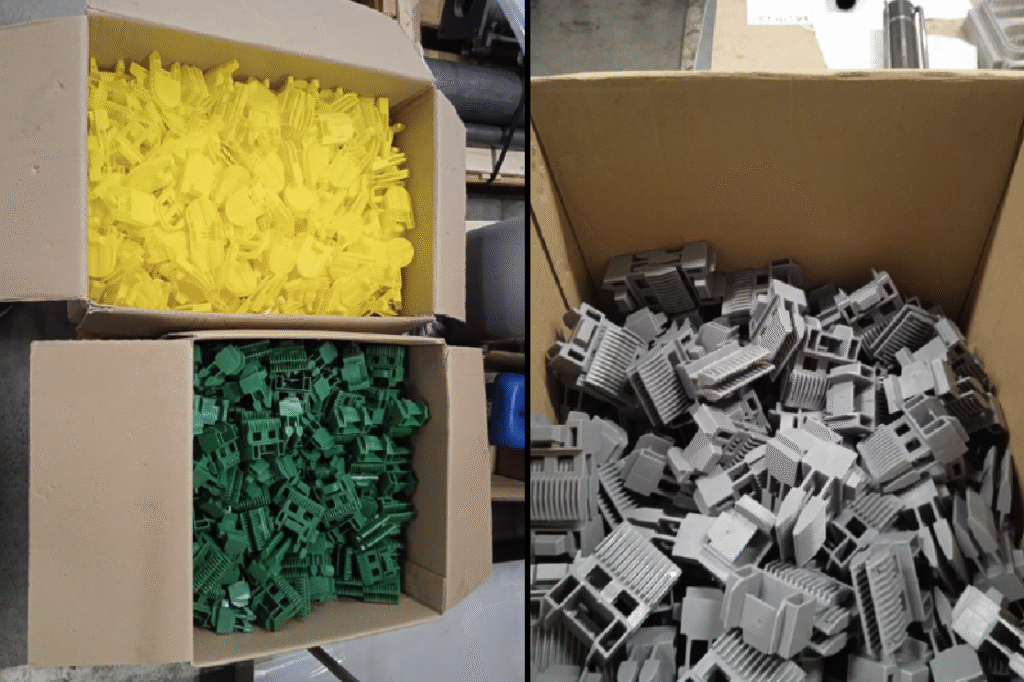
Most common industrial applications
The industrial cleaning of plastics is essential in many sectors where the presence of residues, grease or particles can compromise the functionality, assembly or finish of products.
Among the most frequent applications are the medical industry, with plastic devices, valves, connectors or tubes; the automotive industry, with interior components, electrical housings and technical plastics; the electronics industry, with connectors and moulded parts; the food industry, with trays, tubs and thermoformed parts; or the maintenance of plastic injection moulds.
At IBERKLEEN we develop cleaning solutions able to offer effective and sustainable solutions for the cleaning of plastics in all types of industries.